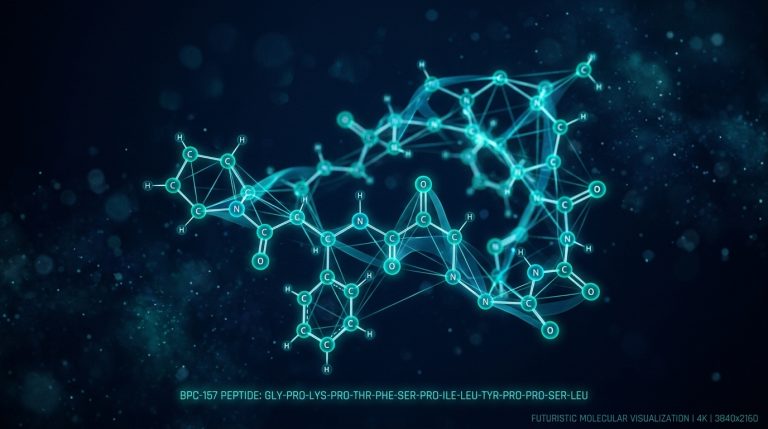
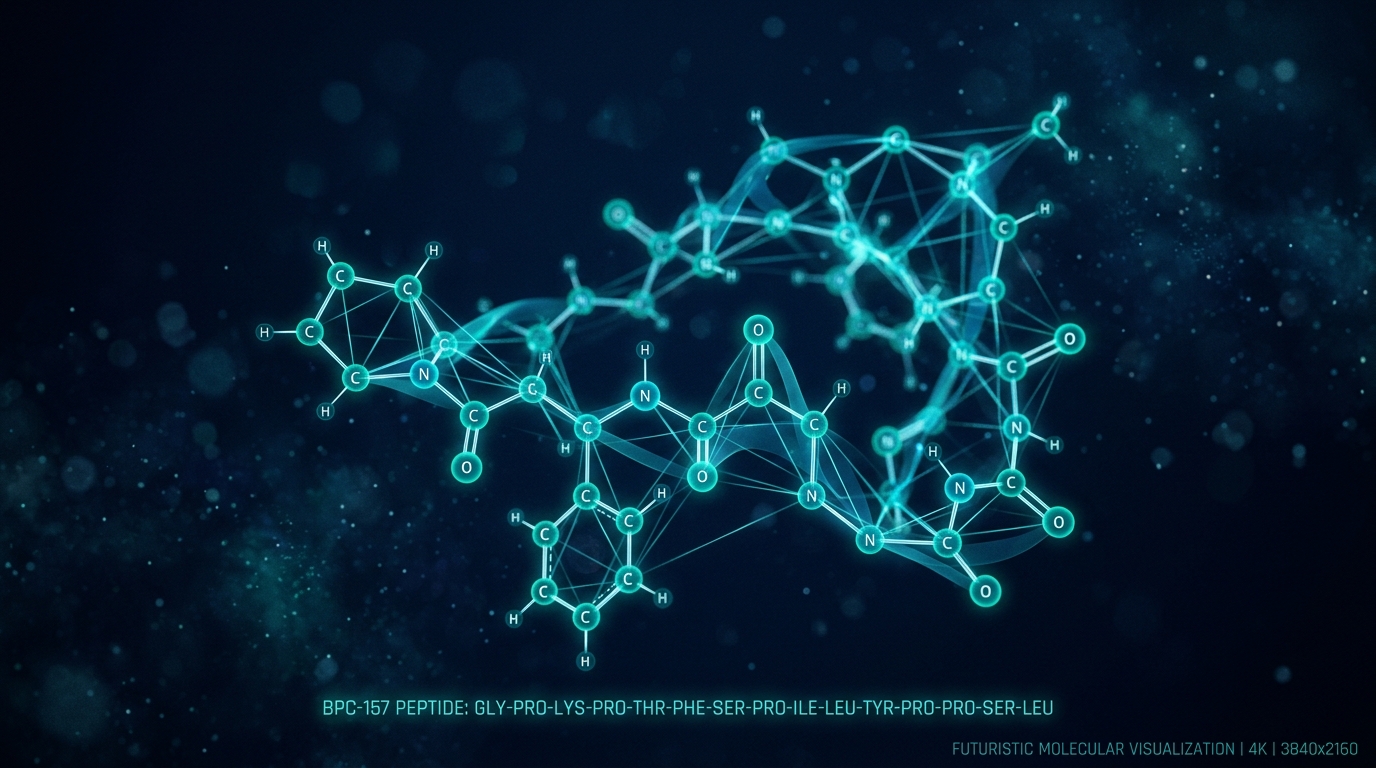
What is BPC-157? It is a synthetic 15-amino-acid peptide that has become one of the most widely studied research compounds in preclinical tissue-repair and gastrointestinal science. This guide covers where BPC-157 comes from, its structure, what animal and cell studies have looked at, the forms researchers can choose from, and how to judge quality before you buy BPC-157 for your lab.
What Is BPC-157? Origin and Structure
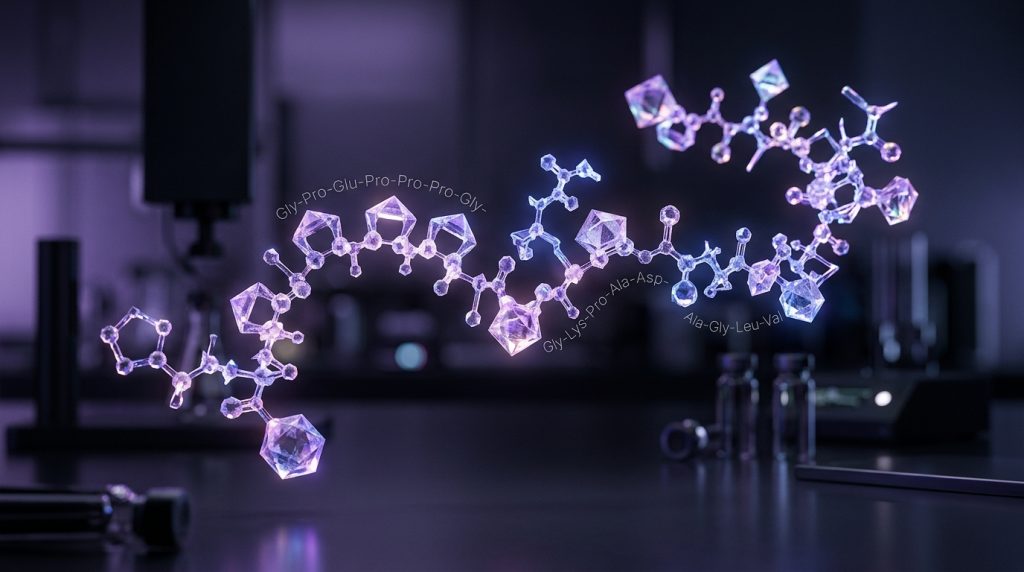
BPC-157 stands for Body Protection Compound-157. It is a pentadecapeptide, meaning a chain of 15 amino acids, with the sequence:
Gly-Glu-Pro-Pro-Pro-Gly-Lys-Pro-Ala-Asp-Asp-Ala-Gly-Leu-Val (GEPPPGKPADDAGLV).
- Molecular weight: roughly 1,419 Da
- Origin: a partial sequence of a larger protein first isolated from human gastric juice
- Production: made synthetically by solid-phase peptide synthesis, then purified by HPLC
- Notable property: early papers reported that it stays unusually stable in gastric juice compared with many other peptides
What Has BPC-157 Been Studied For?
Nearly all BPC-157 research is preclinical, meaning it was done in rodents or in cell cultures. Areas that have been studied include:
- Tendon and ligament models: rat studies of transected Achilles tendons and medial collateral ligaments
- Gastrointestinal models: experimental ulcers, NSAID-induced lesions, and models of inflammatory bowel conditions in animals
- Muscle and bone models: crush injuries, muscle detachment, and fracture models in rodents
- Vascular models: work on angiogenesis and blood vessel responses
- Organ-protection models: liver, heart, and brain models exposed to various toxic agents
Proposed Mechanisms of Action in Research
Researchers have suggested several possible pathways for the effects seen in animal and in-vitro models:
- Angiogenesis signalling: studies have reported increased VEGFR2 expression and activation of related pathways in endothelial cells
- Fibroblast migration: cell-culture work on tendon fibroblasts has looked at the FAK–paxillin pathway and cell spreading
- Growth hormone receptor expression: one in-vitro study reported that tendon fibroblasts exposed to BPC-157 expressed more growth hormone receptor
- Nitric oxide system: a series of papers describes interactions with NO-related pathways
BPC-157 Forms: Acetate, Arginine Salt, Sprays and Capsules
The core peptide sequence is the same in every form, but the salt form and the presentation can affect stability, solubility, and how a protocol is designed:
- Standard lyophilized BPC-157: freeze-dried powder in sealed vials, the most common format in research. Our BPC-157 Premium 10mg lyophilized vial is also available in 6mg and 20mg sizes.
- BPC-157 Acetate: the peptide paired with an acetate counter-ion, a common salt form in peptide synthesis. See BPC-157 Acetate Premium (10mg).
- BPC-157 Arginine Salt: a salt form that some studies describe as having better stability in solution. See BPC-157 with Arginine Salt (10mg).
- Non-lyophilized, spray and capsule formats: pre-dissolved and oral-format research materials, such as BPC-157 Capsules, for studies looking at different delivery routes.
BPC-157 Blends in Research
Some research designs look at BPC-157 together with other peptides that have been studied in related models. A common pairing is BPC-157 with TB-500, a synthetic peptide related to thymosin beta-4. These two compounds are often compared because they appear to act through different pathways. Our BPC-157 + TB-500 Blend (10mg+10mg) provides both in a single lyophilized vial. Multi-peptide formulas such as the Healing and Repair Research Blend add TB4 Frag 1-4 and GHK-Cu.
Storage and Lab Handling of BPC-157
Like most peptides, BPC-157 breaks down when exposed to heat, moisture, light, and repeated temperature changes. Common laboratory practice is:
- Store lyophilized vials frozen (around −20 °C) for long-term storage, or refrigerated (2–8 °C) for shorter periods
- Keep vials sealed and away from light until use
- Reconstitute with an appropriate sterile diluent, such as bacteriostatic water, using aseptic technique
- Refrigerate reconstituted solutions, avoid repeated freeze–thaw cycles, and label vials with the preparation date
How to Judge BPC-157 Purity and Quality
The quality of the peptide directly affects whether your results can be reproduced. Before buying BPC-157 from any supplier, check for:
- A Certificate of Analysis (COA) for the specific batch or lot
- HPLC purity data, ideally at or above 98–99%
- Mass spectrometry confirmation that the molecular weight matches the expected sequence
- Clear labelling of salt form, net content, and lot number
- Careful shipping that protects vials from heat and physical damage
FAQ: Common BPC-157 Research Questions
Is BPC-157 a natural or synthetic peptide?
Research-grade BPC-157 is synthetic. Its sequence comes from a fragment of a protein found in human gastric juice, but the material sold for research is made in a laboratory.
What is the difference between BPC-157 acetate and arginine salt?
Both contain the same 15-amino-acid peptide paired with a different counter-ion. The arginine salt form is often described as having better stability in solution, while acetate is the conventional salt form produced by standard peptide synthesis.
Is BPC-157 approved for human use?
No. BPC-157 is not approved by the FDA or any other major regulator for medical use. It is also on the World Anti-Doping Agency's prohibited list. It is sold for laboratory research only.
How long does lyophilized BPC-157 last?
Stored frozen, sealed, and away from light, lyophilized peptides generally stay stable much longer than reconstituted solutions. Always check the supplier's batch documentation and storage guidance.
Source Research-Grade BPC-157
The BPC-157 Store carries research-grade BPC-157 in lyophilized, acetate, arginine salt, spray, and capsule formats, as well as research blends. Each product comes with batch documentation, so you can match the right format to your study design. If you are new to the compound, the BPC-157 Premium 10mg vial is a common place to start.
Shop BPC-157 Premium 10mgAll products are sold strictly for laboratory research use only. They are not intended for human or animal consumption, or for diagnostic or therapeutic use. Nothing in this article is medical advice.