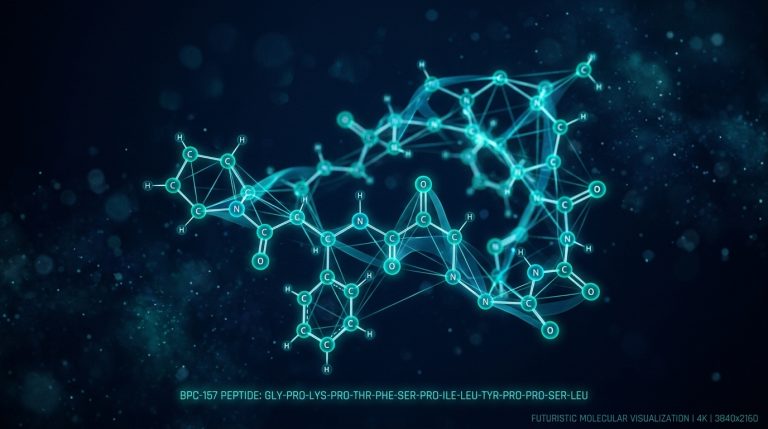
If you are sourcing peptides for a study, you will quickly see two labels on vials: BPC-157 acetate and BPC-157 arginate (also sold as BPC-157 with arginine salt). The peptide sequence is the same in both. What differs is the counter-ion bound to it, and that choice affects how the material behaves in solution, how it is stored and which published work it lines up with. This guide covers the BPC-157 acetate vs arginate question so you can pick the right salt form for your protocol. For background on the peptide itself, start with our research guide to BPC-157.
Same Peptide, Different Salt: The Basics
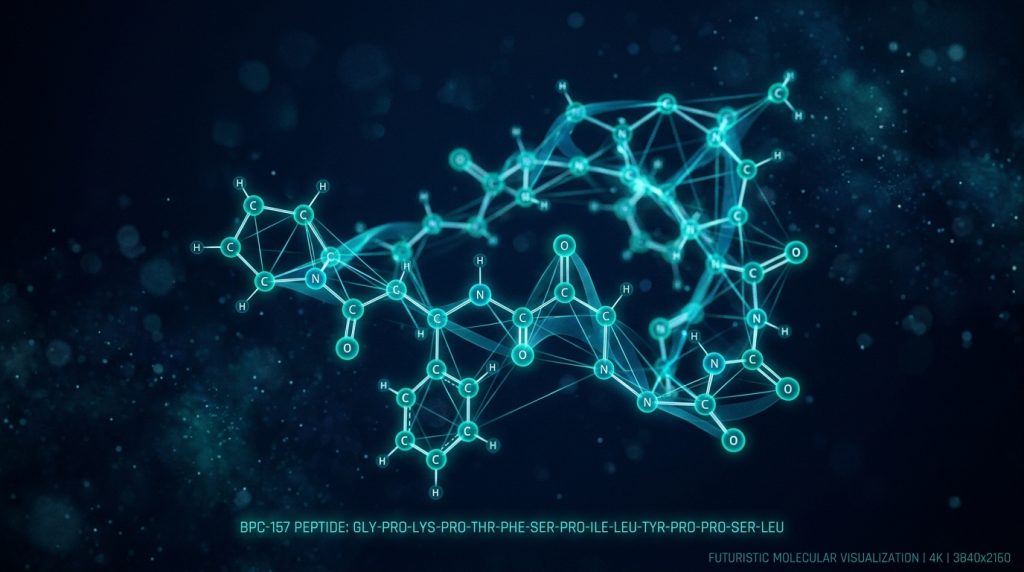
BPC-157 is a synthetic pentadecapeptide, a chain of 15 amino acids (GEPPPGKPADDAGLV) derived from a sequence found in a protein in gastric juice. Synthetic peptides are almost never supplied as a bare molecule. Charged groups on the chain pair with a counter-ion, which forms a salt. The salt affects:
- Solubility: how readily the powder dissolves in a chosen diluent
- Stability: how well the peptide holds up in solution and in different pH conditions
- Net peptide content: the counter-ion adds mass, so some of every milligram is salt rather than peptide
- Comparability: matching the salt form used in a published study makes results easier to compare
What Is BPC-157 Acetate?
BPC-157 acetate is the conventional, most widely supplied form. Most peptides are made by solid-phase synthesis and purified by reverse-phase HPLC. That process often leaves trifluoroacetate (TFA) ions behind, and many manufacturers exchange them for acetate, which is considered more benign in biological assays. Most of the preclinical BPC-157 literature, including the large body of rodent work on tendon, ligament, gut and vascular models, was done with this conventional form.
Key traits of the acetate salt:
- Dissolves readily in standard aqueous diluents such as bacteriostatic water
- Usually supplied lyophilized (freeze-dried) for shelf stability, with non-lyophilized options for convenience
- Matches the form used in most published animal studies
- Widely available in several vial sizes and formats
What Is BPC-157 Arginate (Arginine Salt)?
BPC-157 arginate pairs the peptide with L-arginine as the counter-ion. Patent literature from the research group most associated with BPC-157 describes it as a newer salt form with better stability than the conventional form, especially in solution and in acidic conditions like those of the stomach. That is why the arginine salt is often called "stable BPC-157" and is the form discussed in research on oral and enteral administration routes in animal models.
Points to keep in mind:
- The stability advantages come mainly from patent and supplier documents. Peer-reviewed, head-to-head comparisons of the two salts are limited.
- Arginine is a larger counter-ion than acetate, so the net peptide content per milligram of powder can differ. Always check the certificate of analysis.
- It is the more relevant choice for studies of stability in solution or in simulated gastric conditions.
BPC-157 Acetate vs Arginate: Side-by-Side Comparison
- Counter-ion: acetate (small, conventional) vs L-arginine (larger, newer)
- Research history: acetate/conventional form appears in most published preclinical work. Arginate is newer and documented mostly in patents and a smaller set of studies.
- Reported stability: arginate is described as more stable in solution and acidic pH. Acetate is stable when lyophilized and stored correctly.
- Typical study focus: acetate for broad comparison with the existing literature. Arginate for stability and oral or enteral route research in animal models.
- Formats: acetate comes as lyophilized vials, non-lyophilized vials, sprays and blends. Arginate is mainly sold in vials.
- Net peptide content: differs between salts, so confirm it on each lot's COA
How to Choose a BPC-157 Salt Form for Your Study
No salt form is better for every study. The right choice depends on your study design:
- Replicating published work? Use the salt form the original study used. For most older BPC-157 papers, that is the conventional or acetate form.
- Studying stability in solution or simulated gastric fluid? The arginine salt is the obvious candidate. Running both side by side gives you a useful internal control.
- Need a ready-to-use format? Acetate comes in more formats, including the non-lyophilized BPC-157 Acetate (10mg), sprays and blends.
- Comparing oral research formats? Look at the arginate data together with formats like BPC-157 capsules for in-vitro dissolution or stability work.
Purity, COAs and Storage for Both Forms
Salt form matters less than quality. Before you commit to either form, check:
- HPLC purity: look for a recent chromatogram showing a single dominant peak
- Mass spectrometry: confirms the molecular weight matches BPC-157 (about 1419 Da for the free peptide)
- Lot-specific COA: the certificate should match the batch you actually receive
- Storage: keep lyophilized powder of either salt cold, dry and away from light. Once reconstituted for lab handling, refrigerate it, protect it from light and avoid repeated freeze-thaw cycles.
FAQ: BPC-157 Acetate vs Arginate
Is BPC-157 arginate the same peptide as BPC-157 acetate?
Yes. Both contain the same 15-amino-acid sequence. Only the counter-ion paired with the peptide is different.
Is the arginine salt more stable than acetate?
Patent and supplier documents describe the arginine salt as more stable in solution and acidic conditions. Independent, peer-reviewed head-to-head data is limited, so if stability matters for your work, test it in your own system.
Which BPC-157 salt form was used in most published research?
Most of the preclinical literature used the conventional form of the peptide, which is generally supplied as an acetate salt today. The arginate form is newer.
Does the salt form change how much peptide is in a vial?
It can. Counter-ions add mass, so net peptide content varies between salt forms and between lots. Check the COA for the stated content and purity.
Order Research-Grade BPC-157 in Either Salt Form
Whether your protocol calls for the well-documented BPC-157 acetate or the stability-focused arginine salt, The BPC-157 Store stocks both, in multiple sizes and formats. Compare the options, check the documentation for each product, and pick the salt form that best fits your study.
Shop BPC-157 Arginine SaltAll products are sold strictly for laboratory research use only. They are not intended for human or animal consumption, or for diagnostic or therapeutic use. Nothing in this article is medical advice.