
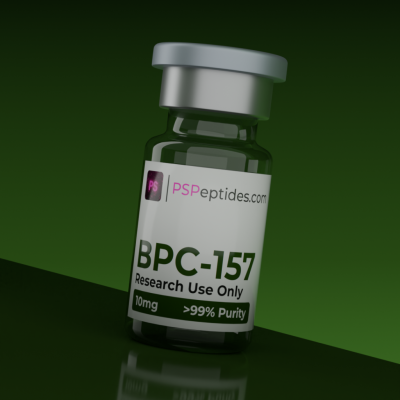

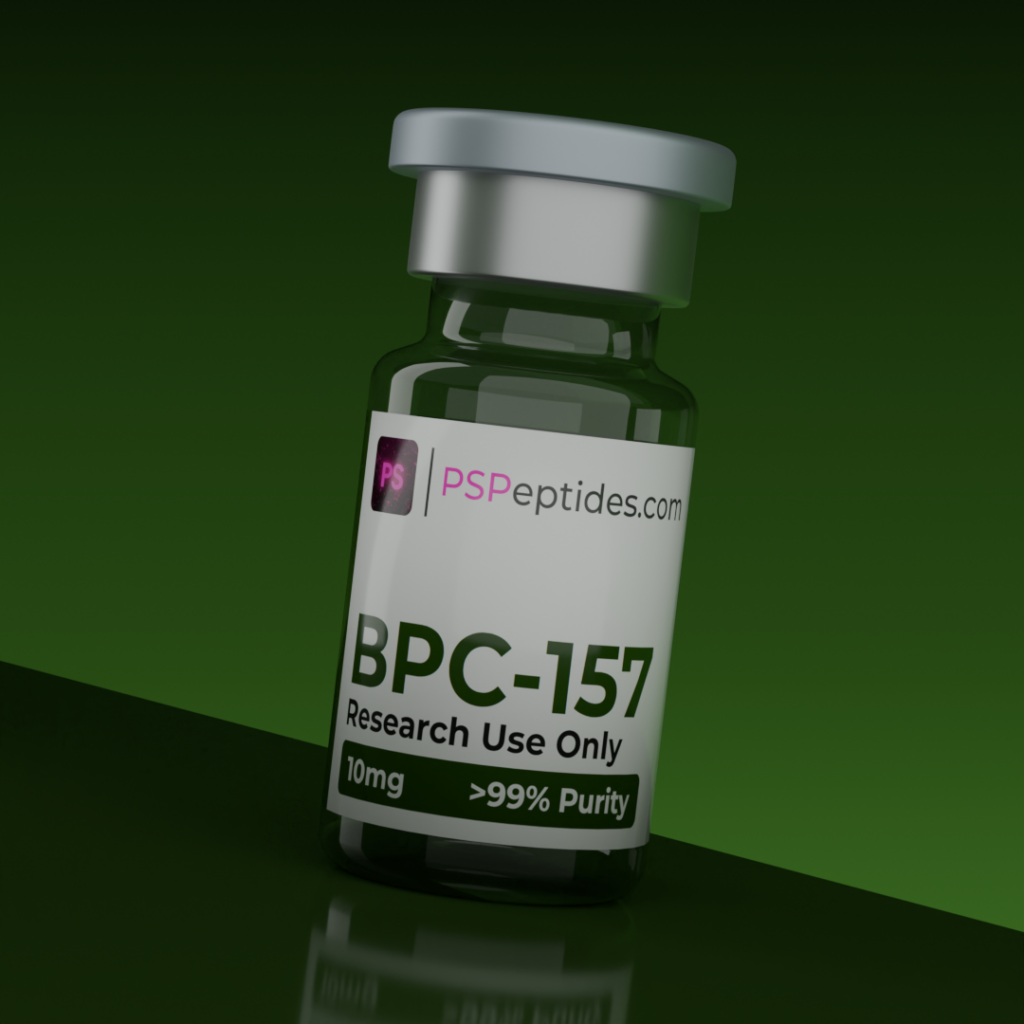
Buy BPC-157 (1 Vial) — a 15-amino acid research peptide with ≥99% purity, US manufactured and third-party tested. Available in 5mg ($49.99) and 10mg ($89.99) lyophilized vials.
- Purity: ≥99% verified via third-party HPLC and mass spectrometry
- Form: Lyophilized (freeze-dried) powder — 5mg or 10mg per vial
- Testing: Batch-specific Certificate of Analysis (COA) included
- Origin: US manufactured, GMP-equivalent synthesis
For laboratory and research use only. Not intended for human consumption.
Description
Buy BPC-157 (Body Protection Compound-157) — a 15-amino acid research peptide with ≥99% purity verified by HPLC and mass spectrometry. This lyophilized powder is US-manufactured and third-party tested, making it the choice of serious researchers who demand batch-specific Certificates of Analysis and consistent quality at every order.
What Is BPC-157?
BPC-157 is a stable gastric pentadecapeptide originally isolated from human gastric juice with the amino acid sequence Gly-Glu-Pro-Pro-Pro-Gly-Lys-Pro-Ala-Asp-Asp-Ala-Gly-Leu-Val (CAS: 137525-51-0). It is among the most extensively studied tissue-repair peptides in published preclinical literature, with over 180 PubMed-indexed studies documenting healing activity across skin, tendon, ligament, muscle, bone, nerve, cornea, and gastrointestinal tissue. Learn more in our BPC-157 complete research guide.
Key Research Applications
- Gastrointestinal Cytoprotection: Originally characterized for its gastroprotective effects, buy BPC-157 to study its significant protection against NSAID-induced GI lesions, inflammatory bowel disease models, and mucosal damage across multiple study designs.
- Neuroprotection: Research has documented BPC-157’s protective effects on dopaminergic neurons and its interaction with the NO system, GABA pathways, and serotonergic systems in neurological models.
- Bone & Cartilage Repair: Preclinical data indicate BPC-157 may support bone healing and cartilage repair, particularly in models of segmental bone defects and osteoarthritis.
Product Specifications
| Peptide | BPC-157 (Body Protection Compound-157) |
| Amount | 5mg / 10mg (select variant) |
| Purity | ≥99% (third-party HPLC and mass spectrometry verified) |
| Form | Lyophilized powder |
| Sequence | Gly-Glu-Pro-Pro-Pro-Gly-Lys-Pro-Ala-Asp-Asp-Ala-Gly-Leu-Val |
| CAS Number | 137525-51-0 |
| Molecular Weight | 1419.5 Da |
| Testing | Batch-specific COA included |
| Origin |
US manufactured |
Detailed Mechanism of Action
BPC-157 promotes angiogenesis through activation of VEGFR2 (vascular endothelial growth factor receptor 2) and stimulates fibroblast migration and proliferation at injury sites — a critical early step in tissue regeneration. This pro-angiogenic activity appears to be central to its documented effects across different tissue types and body systems.
Buy BPC-157 for its well-documented tendon and connective tissue repair effects, which operate primarily via the FAK-paxillin signaling pathway. These effects were observed at picomolar concentrations in vitro, suggesting high receptor sensitivity and potency relative to peptide mass.
Another key mechanism involves modulation of the nitric oxide (NO) system. BPC-157 interacts with NO pathways to regulate blood flow and vascular homeostasis at injury sites. This action may explain its documented cytoprotective effects across both GI and non-GI tissues. In the central nervous system, BPC-157 has been shown to modulate dopaminergic and serotonergic neurotransmission, with published research noting significant interactions with the GABA system as well.
BPC-157 also rapidly upregulates expression of multiple growth factor genes in wound tissue. Studies have documented increased expression of genes encoding EGF, VEGF, and FGF family members within hours of administration in animal wound models. This broad growth factor gene expression profile may explain why researchers who decide to buy BPC-157 observe effects across such a wide variety of tissue compartments and injury models.
The gastrointestinal cytoprotection mechanism of BPC-157 has been studied extensively in rat models of NSAID-induced damage, ethanol-induced damage, and surgical anastomosis. BPC-157 stabilizes intestinal mucosal integrity through a combination of anti-inflammatory effects, NO pathway modulation, and direct growth factor gene induction. These GI effects were the original reason for research interest in this compound and remain among its best-documented activities in the preclinical literature.
Published Research Overview
The published preclinical literature on BPC-157 is extensive and spans more than three decades of research from multiple independent groups. Sikiric and colleagues at the University of Zagreb have published more than 40 peer-reviewed papers on this peptide. Their work spans gastrointestinal protection, musculoskeletal repair, neuroprotection, and systemic cytoprotection. A landmark 2014 paper in Current Pharmaceutical Design described BPC-157 as offering “novel therapy” potential across multiple body systems based on its documented activity in animal models.
Staresinic et al. (2003) in the Journal of Orthopaedic Research documented that BPC-157 accelerated healing of transected rat Achilles tendon compared to controls, with histological analysis confirming superior collagen organization in treated animals. The full record is available at PubMed (PMID 12918639).
In a separate domain, Sikiric et al. (2018) in Current Neuropharmacology provided a comprehensive overview of BPC-157’s brain-gut axis interactions, documenting interactions with multiple neurotransmitter systems. The full text is indexed at PubMed (PMID 29651925).
Additional published work has examined BPC-157 in corneal repair models, bone defect healing, liver fibrosis protection, and inflammatory bowel disease.
BPC-157 vs Alternative Tissue-Repair Peptides
| Feature | BPC-157 | TB-500 | GHK-Cu |
|---|---|---|---|
| Amino Acids | 15 | 43 (fragment) | 3 |
| Primary Mechanism | FAK-paxillin, VEGFR2, NO system | Actin sequestration, angiogenesis | Copper chelation, TGF-β modulation |
| GI Stability | High (gastric-origin peptide) | Moderate | Low |
| Published Studies | 180+ (PubMed) | 40+ (PubMed) | 60+ (PubMed) |
| Tissue Targets | Tendon, GI, nerve, muscle, bone, skin | Muscle, tendon, cardiac | Skin, hair, nerve |
| Combination Research | Studied with TB-500 (Wolverine Stack) | Studied with BPC-157 | Limited combination data |
| Storage Form | Lyophilized powder | Lyophilized powder | Lyophilized powder |
For a 5mg vial, adding 1mL of BAC water yields a 5mg/mL (5000 µg/mL) stock solution. Dilute further with sterile saline or additional BAC water as needed to achieve your experimental concentration.
Route selection depends heavily on the study design and tissue target.
Storage & Stability Guidelines
Lyophilized BPC-157 is stable at −20°C for up to 24 months when properly sealed and protected from moisture, heat, and light. Avoid repeated freeze-thaw cycles, which degrade peptide structural integrity over time. Each freeze-thaw cycle can reduce functional purity by a measurable percentage depending on formulation.
Keep vials away from direct light, as UV exposure can break peptide bonds over time. Our peptide degradation identification guide provides a systematic checklist for quality assessment before experimental use.
Certificate of Analysis — What to Expect
Every batch of BPC-157 sold by PSPeptides includes a batch-specific Certificate of Analysis produced by an independent third-party laboratory. The COA documents HPLC-verified purity of ≥99%, mass spectrometry confirmation of the correct molecular weight (1419.5 Da), and sequence identification. Unlike some suppliers who provide generic or pooled-lot COAs, PSPeptides COAs are batch-specific — your vial’s lot number corresponds directly to the analytical data provided.
Many institutional review processes and journal submission guidelines now require documentation of peptide source and purity. See our detailed guide to reading a peptide COA for help interpreting the analytical data in your report.
Reviews
There are no reviews yet.